 Fraunhofer Center for Assistive Information and Communication Solutions – AICOS
02.11.2026
The 17th edition of the Fraunhofer Portugal Challenge has recognised three research-based technological solutions addressing challenges in drone detection, cancer treatment and brain tumour surgery, alongside an innovative AI-powered solution designed to improve school safety.
The Fraunhofer Portugal AICOS has announced the winners of the 2026 edition of the Fraunhofer Portugal Challenge, its annual technology-based ideas competition, during the closing ceremony held on 29 October at its facilities in Porto.
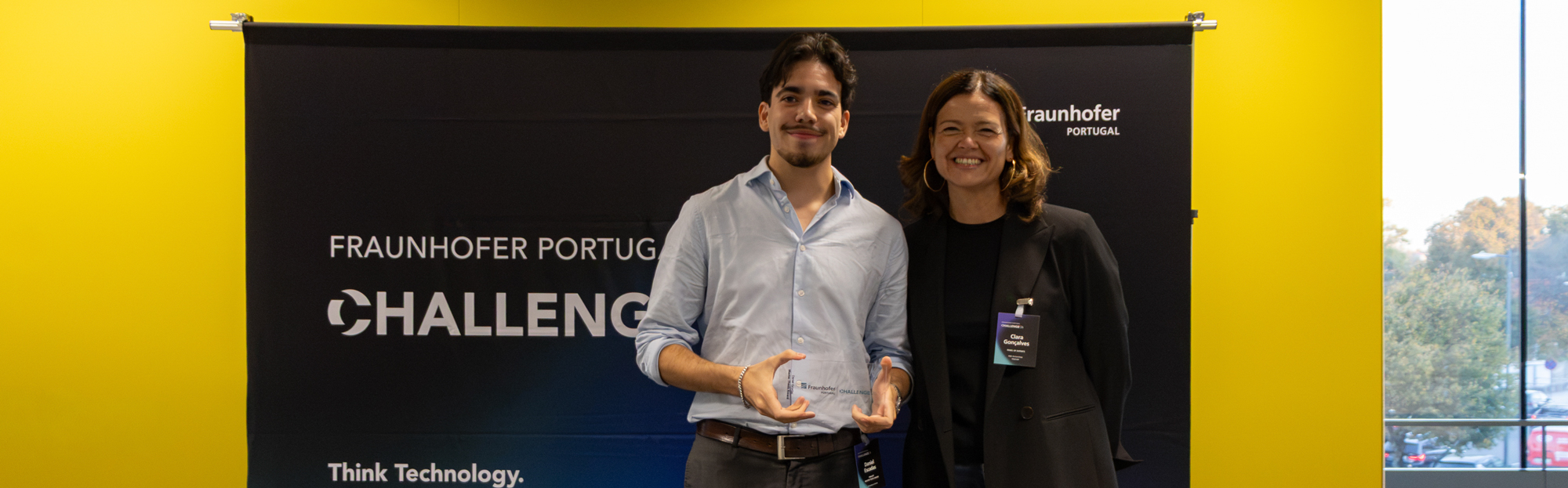
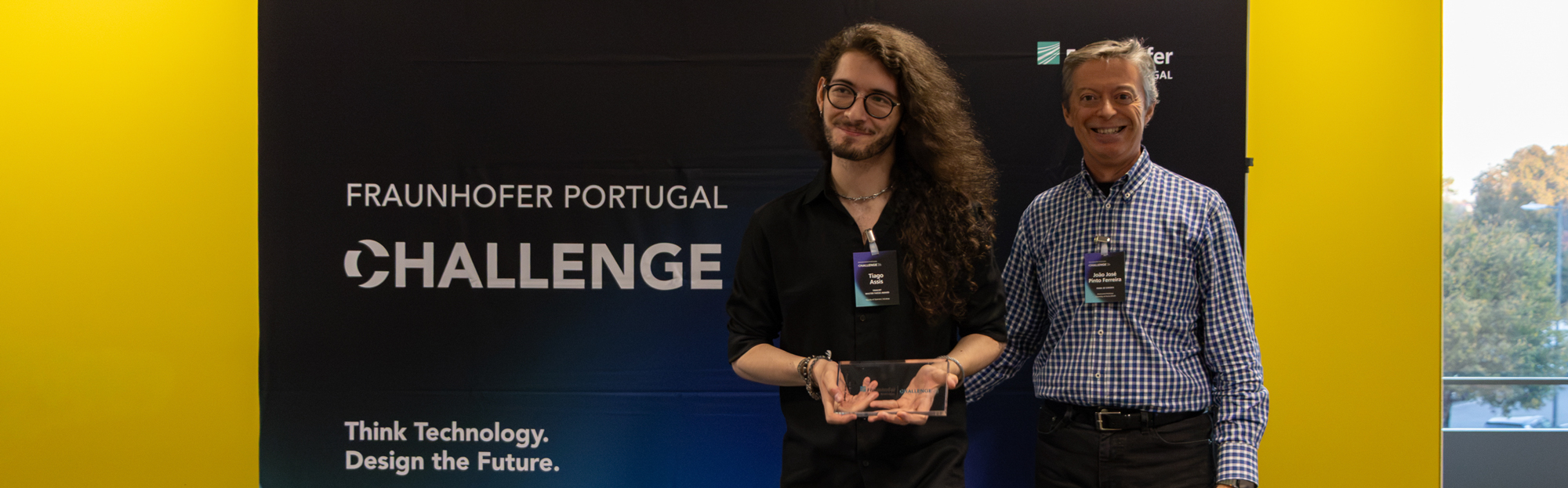
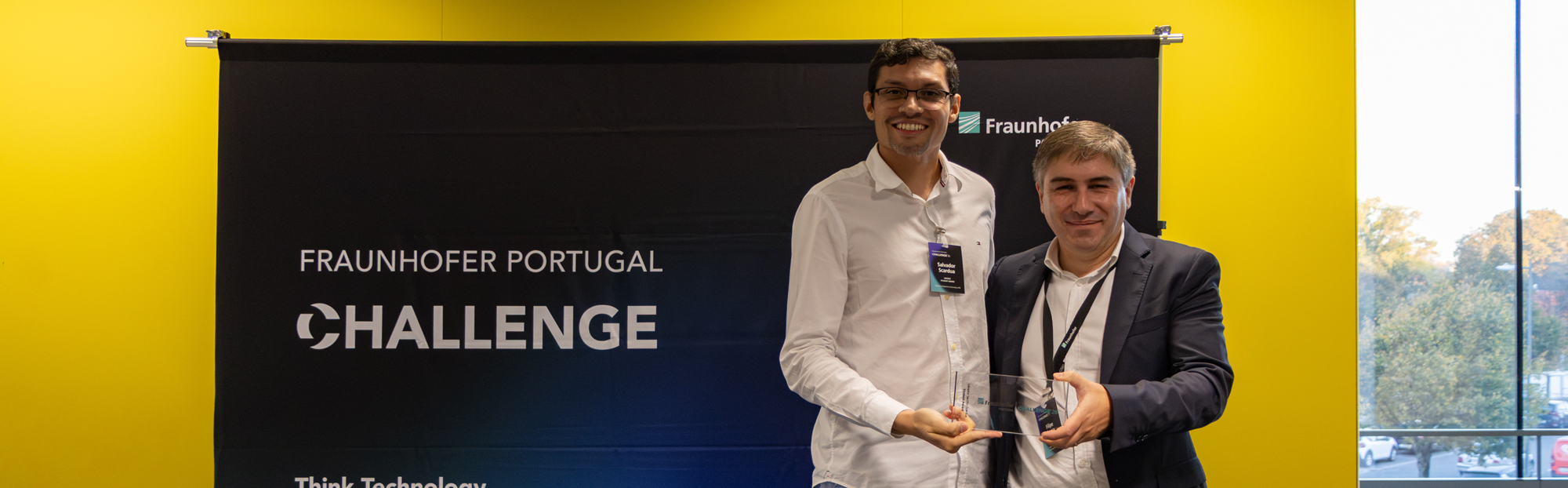
In the Master Thesis Award category, Daniel Escadas (University of Aveiro) took first place, followed by Gonçalo Ribeiro (Instituto Superior Técnico) in second place and Tiago Assis (Faculty of Sciences from the University of Lisbon) in third place. The Student Award was presented to Salvador Scardua (Universidade Politécnica de Bragança).
The winning projects reflect the diversity and potential of applied research to address real-world challenges, bringing together technologies such as radar sensing, artificial intelligence, advanced radiation monitoring and computer vision.
Daniel Escadas (University of Aveiro) – 1st Place | Master Thesis Award
Daniel Escadas was awarded first place for developing a portable, cost-effective radar system capable of detecting small drones and identifying whether they are carrying payloads. Developed at the University of Aveiro, his research combined radar prototyping with artificial intelligence models trained and evaluated using data collected from real drone tests. The research contributed to the development of RF-Sentinel, a detection and protection platform combining radar, radio-frequency sensors and AI to help protect people and critical infrastructure.
Gonçalo Ribeiro (Instituto Superior Técnico) – 2nd Place | Master Thesis Award
Second place went to Gonçalo Ribeiro, CEO and co-founder of RTBeamTech, for his work on a monitoring device designed to meet the demanding requirements of FLASH radiotherapy.
This innovative cancer treatment approach delivers radiation doses in fractions of a second, potentially reducing damage to surrounding healthy tissue. However, its extremely short delivery times pose significant challenges to conventional radiation beam monitoring systems. His research addresses this limitation, contributing to the development of technology that could help bring FLASH radiotherapy closer to clinical application.
Tiago Assis (Faculty of Sciences from the University of Lisbon) – 3rd Place | Master Thesis Award
Tiago Assis, a PhD researcher at Instituto Superior Técnico, received third place for developing an AI-based approach to predict brain deformation during brain tumour surgery.
As the brain shifts and deforms during surgical procedures, pre-operative medical images may become less accurate, making it harder for surgeons to remove tumours while preserving healthy tissue. His approach combines biomechanical simulations with artificial intelligence to predict these changes in real time, with the aim of supporting surgical navigation and enabling more precise interventions.
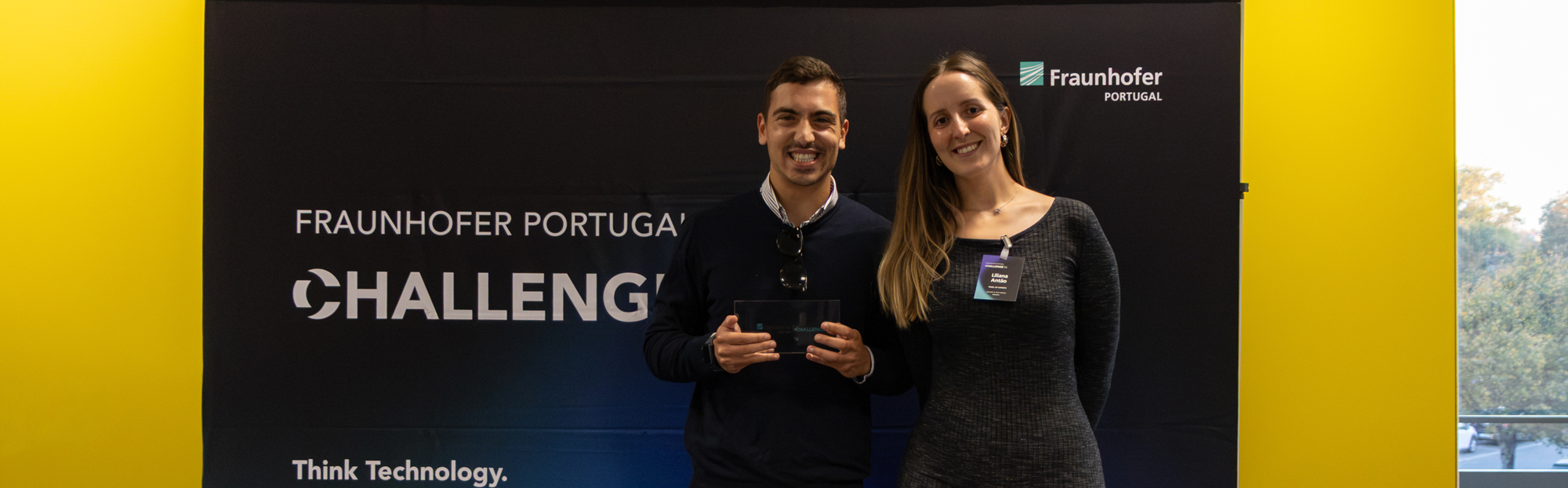
Salvador Scardua (Universidade Politécnica de Bragança) – Student Award
The Student Award was presented to Salvador Scardua for Sentinela Digital, an AI and computer vision solution designed to strengthen school safety.
Developed within Memoriacam, the system uses Edge AI technologies to analyse images in real time and identify potentially risky situations, unusual behaviour and possible incidents. Based on Privacy by Design principles, the solution seeks to protect students' identities while providing relevant information to support preventive and timely action.
Recognising innovation and research talent
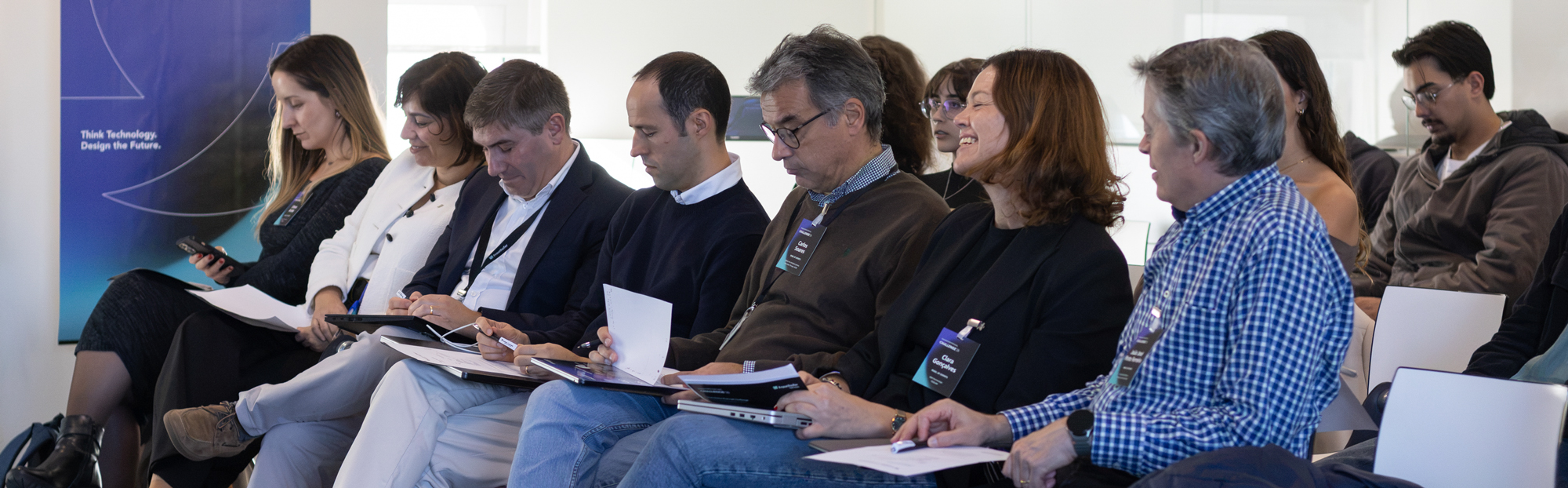
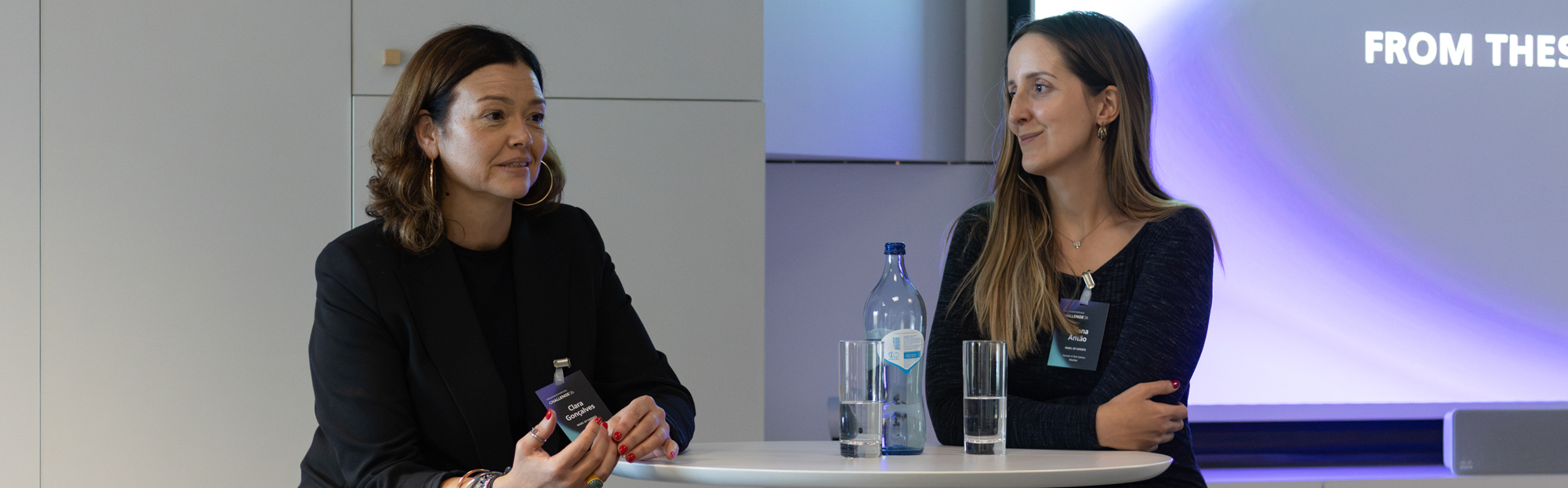
The 2026 edition was evaluated by a jury and panel of experts bringing together representatives from Fraunhofer Portugal AICOS, academia and industry: Liliana Ferreira, Director of Fraunhofer Portugal AICOS; Filipe Sousa, Head of Strategic Partnerships and Innovation; Francisco Nunes, President of the Fraunhofer Portugal Scientific Board; Carlos Soares, Professor at FEUP and External Advisor to Fraunhofer Portugal AICOS; João José Ferreira Pinto, Professor at FEUP and INESC TEC; Clara Gonçalves, R&D Partnerships Director at TEKEVER; and Liliana Antão, Co-founder of Medtiles.
Organised since 2010, the Fraunhofer Portugal Challenge encourages students from Portuguese higher education institutions to transform scientific knowledge into innovative technological solutions with practical application and societal impact.
The competition includes two categories: the Master Thesis Award, dedicated to ideas developed within master's theses, and the Student Award, which recognises promising technological proposals from students.
The Master Thesis Award grants €3,000 to the first-place winner, €2,000 to the second-place winner and €1,000 to the third-place winner. The Student Award includes a €3,000 prize and mentoring from Fraunhofer Portugal AICOS experts.
Through the Fraunhofer Portugal Challenge, Fraunhofer Portugal AICOS reinforces its commitment to applied research, the development of emerging talent and the transformation of scientific knowledge into solutions that can make a meaningful difference in society.